
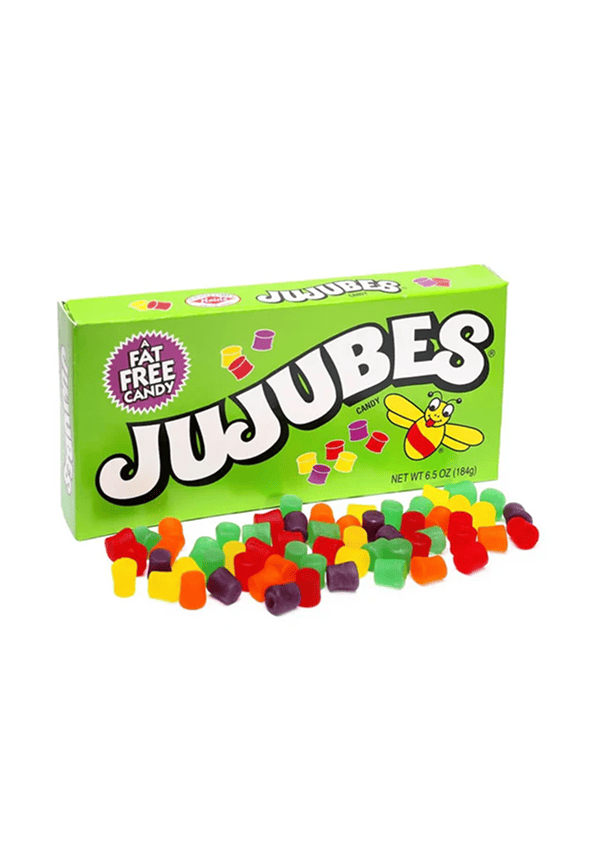
Jujubes Candy
Some candies come and go with the season. It has been going strong since 1920, which makes it one of the longest-running confectionery acts in American history. Small, dense, brilliantly colored, and loaded with fruit flavor that takes its time — this is the candy that generations of moviegoers, Halloween trick-or-treaters, and serious candy lovers have been reaching for without needing to explain why. There is nothing else quite like it.
The chew is firm, deliberate, almost meditative — the kind that makes you slow down and actually taste what you’re eating instead of burning through it in three seconds.
Gentle and Natural Formula
A Truly Unique Texture
Five Distinct, Classic Flavors
Long-Lasting Satisfaction
Check the best-selling products from Jujubes Candy

Jujubes Candy Resealable Share Bag — Mixed Flavors
The classic in a format built for sharing — or not. This resealable pouch brings the full jujubes candy color and flavor lineup into a grab-and-go bag that’s perfect for home snacking, road trips, Halloween bowls, and anywhere else a theater box would be overkill. The resealable top keeps the candy fresh between sessions, and the generous bag size means you won’t be rationing. All five flavors, all the chew, none of the formality.
Jujubes Candy Theater Box — Classic Green, 6.5 oz
The original way to eat jujubes candy, exactly as intended. This is the iconic theater box — the format the candy was practically born for — loaded with 6.5 ounces of the full five-flavor lineup in the signature bright green packaging. Fat-free, fruit-flavored, and built for the long haul of a two-hour movie. Small enough to hold in one hand, satisfying enough to last the whole film. A piece of American candy history in a box.
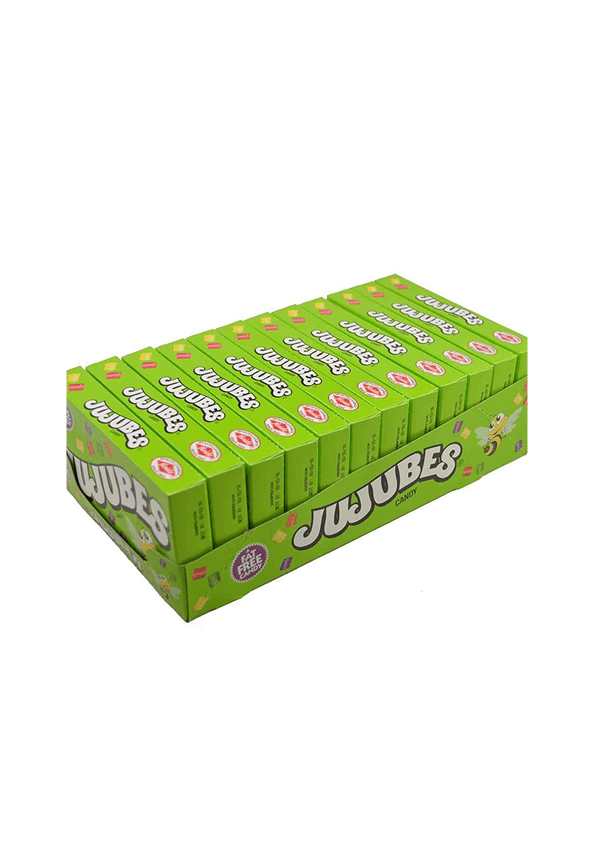
Jujubes Candy Theater Box Bulk Case — 12 Pack
Stock up and never run out. This 12-box bulk case is the move for serious jujubes candy fans, party planners, movie nights with a crowd, or anyone who got tired of running out too fast. Each box is the full 6.5 oz theater size, ready to hand out, display in a candy bowl, or stash for personal use over the coming months. Buying in bulk is just the practical choice when you already know you’ll go back for more.
Small. Dense. Completely Unforgettable.
Customer Reviews
Some Classics Are Classic for a Reason.
The story begins long before America got involved.
The jujube fruit — a small, sweet, date-like drupe from the Ziziphus tree — had been used in confectionery since at least the early 1700s, when European candy makers turned it into a gum-based sweet. The first documented jujube candy formulation dates to 1709. By the time Henry Heide brought his own version to the United States in the 1920s, the concept had already been refined across two centuries of European tradition.
Henry Heide emigrated from Germany to Pittsburgh in 1866, eventually settling in New York City where he built one of America’s most beloved candy companies.
His version became an American institution — small, waxy, fruit-flavored drops in lilac, violet, rose, lemon, and spearmint that found their natural home in movie theater candy counters across the country. The brand passed through several hands over the decades — from Heide’s family to Hershey in 1995, then to Farley’s & Sathers in 2002, and finally to Ferrara Candy Company through the 2012 merger — with the core identity of the candy remaining intact through every transition.
Today the flavor lineup is of wild cherry, lemon, lime, violet, and lilac — evolved from the original but recognizable in spirit. The dense, long-lasting chew that made the candy famous remains its defining characteristic. In a confectionery landscape dominated by soft textures, this candy occupies a unique position: the candy that asks you to slow down, and rewards you for it.
01
Long-Lasting Satisfaction
Because the texture is firm and dense, each piece takes time to eat. A single piece delivers more eating experience than most soft candies can manage in a handful. For movie-watching, long drives, or any situation where you want a candy that doesn’t disappear immediately, the longevity here is a genuine practical advantage.
02
A Genuine Nostalgia Trigger
For anyone who grew up eating them at the movies or finding them in Halloween bags, the flavor and texture are an instant sensory memory. That nostalgia isn’t just sentimental — it’s a real part of the product’s value. Sharing them with someone who remembers is a different experience than introducing them to a new candy.
03
Theater-Perfect Format
The theater box format sold for decades is genuinely well-suited to the movie-watching experience. The pieces are small enough to eat quietly, firm enough not to melt in a warm room, and flavorful enough to hold interest through a two-hour film. It’s designed, consciously or not, for exactly this use case.

The candy has been on the shelf since 1920, which is the most direct possible answer to the question of how it compares to the competition. The market has tested it against over a century of alternatives and the candy is still here. Most of those alternatives are not.
The Chew That Lasts the Whole Movie.
A Texture Experience That Cannot Be Replicated
That texture isn’t a limitation to be apologized for — it’s a differentiated sensory experience that exists nowhere else in the mass confectionery market. Fans love it for exactly this texture, not despite it. That specificity creates a loyal customer base that no amount of soft-candy competition can meaningfully erode.
A Flavor Profile That Respects Subtlety
That subtlety is unfashionable in modern confectionery, which is exactly why it’s valuable. In a market where everything is turned up to maximum, this candy trusts the customer’s palate rather than overwhelming it. Customers who respond to that trust are among the most loyal in any candy category.
Genuine Cultural Embeddedness That New Brands Cannot Buy
That embeddedness makes it something entirely different from a new entrant in the same product category: it’s not competing with current candy trends, it’s occupying a category of nostalgic authenticity that no new product can access. When someone buys a box, they’re often buying a memory as much as a snack. The emotional content of that transaction is something no competitor can replicate, regardless of how good the product is.
Slow Down. It’s Worth It.
FAQ – Frequently Asked Questions
Find answers to commonly asked questions about Jujubes Candy
The current flavor lineup consists of five: wild cherry (red), lemon (yellow), lime (green), violet (purple), and lilac (pink/white). This represents an evolution from the original 1920s Heide formulation, which included lilac, violet, rose, lemon, and spearmint. Over the decades, the flavors shifted toward the more classic fruit profiles — cherry and lime replaced rose and spearmint — while violet and lilac were retained as distinctive elements that set jujubes candy apart from more conventional fruit candy lineups. The lilac and violet flavors are unique in the mass confectionery market and are often cited as the flavors that most define the candy’s personality.
The chew is firm, dense, and waxy that is unlike most modern candy textures. It’s often described as somewhere between a gumdrop and a gummy bear, but firmer and more long-lasting than either. The texture comes from the gum-based confectionery tradition the candy descends from — originally made with gum arabic, now produced with modified food starch and gelatin. The chew is substantial enough that the candy lasts significantly longer than soft gummy equivalents, making it a satisfying option for extended snacking situations like movies or long drives. The firmness can increase in colder temperatures and decrease in warmer environments, which is worth knowing if you’re storing or serving them in temperature-variable conditions.
Yes — gluten-free, which makes it accessible to people with gluten sensitivities or celiac disease who want a classic chewy candy without dietary concerns. The primary ingredients — sugar, modified food starch, confectioner’s glaze, natural and artificial flavors, and colorings — do not contain gluten-bearing grains. As with any dietary restriction, checking the current packaging for the most up-to-date ingredient and allergen information is always recommended, as formulations can change over time. That said, the gluten-free status has been consistent across recent production and is a frequently cited feature for customers with relevant dietary needs.
Both are related products from the same Heide candy heritage but are distinct in meaningful ways. Jujyfruits are shaped like fruits and vegetables — raspberries, bananas, pineapples, asparagus bundles — and have a somewhat softer texture than jujubes candy. Jujubes are simple rounded drops without the novelty shapes. The flavor profiles are similar — both lean on fruit flavors with some unusual additions — but the jujubes tend to have more subtle flavor development that rewards the longer chew, while Jujyfruits deliver flavor more immediately. Both are classic Heide-era candies with strong nostalgia value; which one a person prefers tends to be a deeply personal and often surprisingly passionate opinion.
Jujubes candy has been doing exactly one thing since 1920 — delivering a chewy, fruit-flavored experience that nothing else in the candy aisle comes close to replicating.
Over a century in, the original is still the best.